A new long-term innovation instrument is needed to safeguard the Netherlands’ future earning capacity
When the new round of the National Growth Fund (NGF) comes to an end in a few years’ time, the Netherlands will need a new, coherent and long-term innovation instrument to enable greater and more targeted structural investment in R&D and innovation. Successful innovation programmes run for ten to fifteen years, attract private investment and foster active collaboration between businesses, knowledge institutions and government within strong ecosystems. These are the findings of research by TNO Vector. Such an instrument is needed to translate knowledge into new businesses and economic growth more rapidly, while also addressing societal challenges.
Download here the report (in Dutch)
A new estimate by TNO suggests that, under unchanged policies, achieving the target of investing 3% of GDP in R&D by 2030 is becoming increasingly unlikely, partly because the NGF is coming to an end. There is therefore a need for a structural, ‘NGF-like’ instrument that complements other targeted instruments, such as PPS-I, the National Agency for Disruptive Innovation (NADI) and the National Investment Institution (NII). This would enable the Netherlands to close the gap with neighbouring countries and overcome the innovation paradox. Commissioned by NXTGEN Hightech, TNO Vector examined the success factors of Dutch and international innovation programmes and identified seven building blocks
Long-term yet flexible
TNO Vector analysed three ongoing NGF programmes and three international programmes for public-private innovation collaboration. Successful programmes combine a clear strategic direction with long-term funding, substantial private co-investment, strong ecosystems and active programme management.
A timeframe of ten to fifteen years gives businesses and knowledge institutions the confidence to invest in knowledge, people and technology themselves. However, a long-term approach does not mean locking programmes into a fixed plan for ten years. Clear interim decision points, known as stage gates, can be used to steer programmes based on progress, quality and impact.
Seven recommendations
Based on their analysis, the researchers make seven recommendations:
- ensure long-term continuity
- make clear strategic choices
- adopt a programme-based approach
- put active, expert governance in place
- encourage private co-investment
- invest explicitly in ecosystems
- ensure alignment with other innovation instruments
A future instrument should therefore not operate simply as a grant scheme, but as an actively managed programme that brings together businesses, knowledge institutions, start-ups, scale-ups and government. Ultimately, no single instrument will determine success. What matters is the combination of strategic focus, long-term funding, collaboration and governance. Together, these can help innovations move more rapidly from knowledge development to application and market adoption.

‘When the NGF comes to an end, it will leave a gap in Dutch innovation policy. A new, structural and complementary instrument can fill that gap. Continuity is essential, as it gives organisations the confidence they need to invest. At the same time, different instruments each have their own role to play. NADI focuses on disruptive, high-risk innovation; the current NGF strengthens innovation ecosystems and accelerates the development of new businesses in strategic priority areas; and the NII finances and supports innovative companies as they scale up. To avoid breaking this chain, a structural successor will be needed once the final NGF round comes to an end.’
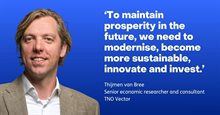
Thijmen van Bree, Senior economic researcher and consultant
Meet the authors




Questions? Get in touch with me
-

Cor Jorna
Functie:Business DeveloperSpecialisatie niet bekend-
E-mail:E-mail Cor
-
LinkedIn:Cor on LinkedIn
-