Spatial quality and the Netherlands’ earning capacity
Insights article following the TNO Vector symposium session ‘Space is scarce and determines our earning capacity.’
As Bas van der Pol, Alderman of Tilburg, emphasised during the conference plenary session: ‘In the Netherlands we are good at transforming urban areas in a sustainable and qualitative way.. The question is: what can we learn from this approach when it comes to future-proofing industrial or business parks?’
The Netherlands and Europe want to strengthen their strategic autonomy. This requires more physical space for energy, food, defence and security. However, space in the Netherlands is scarce, and what is happening in Tilburg is increasingly reflected in other municipalities as well. How can scarce prime locations - with good infrastructure, environmental capacity and proximity to knowledge centres - be used for economic activity in a way that contributes to the future earning capacity of both city and region?
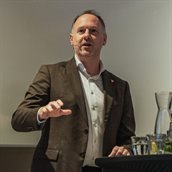
‘In the Netherlands we are good at transforming urban areas in a sustainable and qualitative way.. The question is: what can we learn from this approach when it comes to future-proofing industrial or business parks?’
Bas van der Pol, Alderman of Tilburg
Consequences of a one-sided perspective
In economic policy documents, space is still too often expressed in terms of the required number of square metres (space), while the quality of space (also called place, i.e. social, network and innovation-related) in these work or innovation areas remains underexposed. In addition, economic choices are too often based on a single spatial future perspective. This leads to monotonous areas and limited flexibility when circumstances change.
During the session, Hélène van Rijn (Senior Policy Advisor for Economic Affairs) brought these points to life with practical examples from the Rotterdam The Hague Metropolitan Region (MRDH). Some of the challenges NOVEX Southern Randstad currently faces are: How do you create exchange between the different sectors in the area to stimulate innovation? How do you develop a recognisable future perspective for the Southern Randstad in which no single city or sector dominates?
A broad perspective on space and earning capacity
According to TNO Vector, the development or transformation of work or innovation locations does not yet start from the right questions, in order for it to also support the sustainable development of the Dutch’ earning capacity. That is why the breakout session on space used the TNO Vector framework for a broad perspective on earning capacity and space.
Practising a broad perspective through cases
In groups, participants worked on a range of cases. The TNO Vector framework was used to formulate solutions from a broader perspective on earning capacity and space. A selection of the results from the different groups is set out below:
1.
Regional level – campuses
From the broad perspective, the following question emerged: how do we avoid strong steering by the EU or national government based purely on the number of square metres, and ensure that local societal challenges are included in campus development? One solution participants identified was to encourage companies at these locations to use their innovation capacity, economic activities and a broad sense of ownership to address some of these societal challenges.
2.
Regional level – circular industrial parks
Participants indicated that targeted adaptive capability is essential for the necessary transformation of industrial parks. Their proposal was to collaborate more based on a shared vision for the renewal of economic activities and to take a broader perspective (thus take all capitals into account) on the industrial parks themselves This enables sharper choices about what we will continue to do and, just as importantly, what we will no longer do.
3.
Local level – multimodal hubs
The group called for an integrated perspective early in the process and for looking at the right scale level for the challenges currently at hand. Their outcome was to make use of Digital Twins, which map not only the physical effects of choices, but also the social, natural, human and financial-economic effects.
4.
Local level – mixed innovation and work locations
Many areas still have fragmented ecosystems, while connecting social, human or natural ecosystems can create new opportunities for sustainable earning capacity. Linking employment with education, training and talent development should become self-evident. The Mechatronics Innovation Campus Schiedam (MICS) inspired the participants. Here, an ecosystem is being built by connecting the manufacturing industry with educational institutions, innovation programmes and the creation of an attractive working environment. Inspiration from Flanders comes from the Interweaving Coach. This helps local authorities better align economic activities, land use and quality of life.
A broad perspective opens up new opportunities
The sustainable and high-quality development or transformation of work or innovation areas is a complex but necessary task for the Netherlands’ sustainable, long-term earning capacity. As practising with the TNO framework in the different groups showed, the framework makes that complexity manageable while at the same time encouraging a broader perspective on the challenge. This created space in the discussions to formulate new solutions for a sustainable future for such areas.
About the break-out sessions
Read also the Insights of the other break-outs of the Vector Symposium.
Meet the authors

Questions? Get in touch with me
-
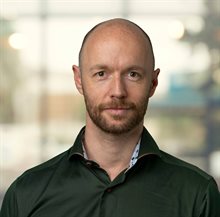
David Dooghe
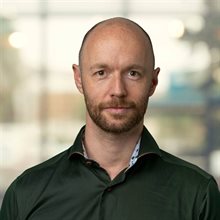
Functie:Senior researcher and advisor space, technology and transitionSpecialisatie niet bekendI am David Dooghe, senior researcher and consultant around space, technology and transitions at TNO Vector. Trained as an architect and urban planner, I focus on the spatial (policy) challenges and incorporation of technologies, and broader transitions, such as the health, energy or mobility transition.
-
E-mail:E-mail David
-
LinkedIn:David on LinkedIn
-