When good intentions are not enough
The debate on wind turbines in the Green Heart shows how complex the energy transition becomes once ambitions are translated into concrete locations. Not because policymakers, communities or provinces intend to get it wrong - quite the opposite. But because good intentions only work when participation, mandate and decision-making are properly aligned.
From ambition to a place on the map
On paper, there is often broad agreement. The Netherlands must become more sustainable. We want to be less dependent on fossil energy from unstable regions. We want to make our energy system more future-proof. This sense of urgency is also felt in South Holland, where the province stresses that the Netherlands needs to reduce its dependence on energy imports.
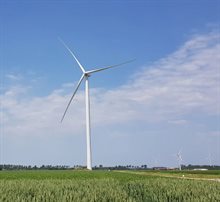
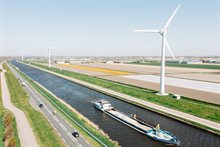
But then things becomes a reality. The discussion is no longer about sustainable energy, but about wind turbines potentially reaching 240 metres in height in an open polder landscape. About views, noise, slag shadow, birds, housing, landscape and people’s sense of home. According to NOS, three locations in and around the Green Heart are under consideration, with space for a total of 27 turbines. Earlier, eleven locations were considered, but this number was reduced following social and political opposition.
This is where the tension arises. The system need is significant, but the local impact is very real. Dismissing this tension as ‘resistance’ overlooks an important point. People respond not to an abstract climate goal, but to a profound change in their living environment. This can create a mismatch between what initiators intend - to explore technical possibilities - and what people experience - that the decision has effectively already been made. Proximity to the turbines and perceived impact often play a major role, before, during and after the development of a wind farm.
Participation is not a magic word
What makes these situations so complex is that everyone can feel they have acted carefully. A province may argue that views have been collected, hearings held and that people have been listened to. At the same time, residents may feel they have not been heard. Both can be true.
This is what makes citizen participation so challenging. Participation does not automatically mean that everyone has decision-making power, nor that everyone will be satisfied with the outcome. Research shows that when it is not clear in advance what influence people have, when interests are gathered, and where political decision-making begins, disappointment quickly arises. Participation can then feel like a ritual rather than a meaningful form of involvement - especially when it starts only after the main frameworks are already in place. In such cases, it may be perceived as tokenistic, leading to frustration, distrust and opposition, including among those who were initially neutral or positive.
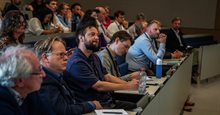
On April 10, more than one hundred speakers addressed Provincial Council members during a twelve-hour hearing. This is not noise around decision-making - it is the very reality within which decisions must be made.
TNO research on citizen participation in the energy transition (see the reports in Dutch Participation in practice and Experience onshore wind energy) shows that intensive interaction with communities yields valuable insights. However, these insights only gain meaning when they are demonstrably reflected in policy and project choices. Participation therefore requires not only constructive dialogue, but also clarity about influence, choices and responsibilities.
The governance in-between space
Major transitions rarely fail due to a lack of technology or ambition, but rather in the space between policy, governance, implementation and society. Who has which mandate? At what scale is the issue addressed? Where are interests weighed? And who takes responsibility for the inevitable impacts of implementation?
It is precisely in this in-between space that governments need innovation capacity: the ability to adapt, learn and collaborate under pressure - not as isolated experiments, but as part of everyday governance. It is about maintaining direction while adjusting where necessary.
This requires more than consultation. It calls for clear roles, shared ownership and honest communication about room for manoeuvre. Municipalities are close to residents and feel the local impact directly. Provinces have formal powers and must weigh regional objectives. National government sets ambitions and frameworks. None of these roles are simple. This is exactly why alignment between them is essential. When that alignment is lacking, governance friction can emerge, which is quickly perceived by residents as unreliability.
‘Support is therefore also an outcome of good governance: clear choices, transparency about interests, recognition of impacts, and genuine attention to compensation or alternatives.’
Support develops over time
In discussions about wind energy, it is often said that ‘there is insufficient support’. This is understandable, but also problematic if it implies that difficult decisions can only be taken once there is full agreement. In spatial transitions, this is rarely the case.
Support is not only a precondition; it also develops during the process - and not in a linear way. An initially positive attitude can shift when people are confronted with concrete local impacts. At the same time, trust can grow when concerns are taken seriously, decisions are explained, and it is clear how input has been used. Support is therefore also an outcome of good governance: clear choices, transparency about interests, recognition of impacts, and genuine attention to compensation or alternatives. A decision does not have to be popular to endure - but it must be understandable.
This raises a broader question: how do we make transitions governable, organisable and deliverable? This requires more than traditional consultation. It calls for spaces in which residents, communities and policymakers can jointly explore what works, where boundaries lie, and which choices are truly at stake.
Organising good intentions
In cases such as the Green Heart, it is not provinces, municipalities or residents that fall short. The key insight is that transitions require better organisation of good intentions. Ambition must be linked to mandate, participation to clarity, urgency to care, and implementation to the capacity to learn under pressure.
This aligns with a central message from the TNO report Participation in the physical living environment (in Dutch): investing in participation is not a delay, but a necessary condition for keeping spatial transitions governable, deliverable and socially legitimate.
This may be uncomfortable, but it is essential. The energy transition will not be achieved through technology or targets alone - it will also be shaped by the quality of our decision-making. Perhaps this is the question we should be asking more often: do we not only have enough sustainable energy plans, but also sufficient governance innovation capacity to make them understandable and deliverable?
Meet the authors



Questions? Get in touch with me
-
Lotte de Groen
Functie:Market directorSpecialisatie niet bekendMy name is Lotte de Groen. I am market director at TNO Vector, where I operate at the strategic intersection of societal transitions, innovation, and market development. In this role, I focus on accelerating and scaling transitions that have a tangible impact on long-term competitiveness, societal resilience, and broad prosperity.
-
E-mail:E-mail Lotte
-
LinkedIn:Lotte on LinkedIn
-