Striving for strategic autonomy through cooperation with like-minded countries
The coronavirus crisis, the blockage of a container ship in the Suez Canal, and restrictions on the export of rare raw materials: unexpected events and geopolitical tensions highlight how economically vulnerable a country can be. Especially our country, with an open economy, is highly dependent on imports and exports. To minimise vulnerabilities, cooperation with like-minded countries within and outside Europe is crucial. One of those countries is South Korea.

Strategic autonomy
At the initiative of the Ministry of Foreign Affairs, the Hague Centre for Strategic Studies (HCSS) organised a symposium on this topic together with the Korean Institute for International Economic Policy (KIEP). In this context, TNO conducted research into the need for cooperation between countries to promote strategic autonomy. The findings were published in a contribution titled ‘Cooperation on control points is needed for strategic autonomy’, included in the collection ‘Industrial Open Strategic Autonomy in the Indo-Pacific: Focusing on High-Tech Industrial Innovation and Supply Chain Security’, which was published online in december.
Report ‘Cooperation on control points is needed for strategic autonomy’
Read our contribution “Cooperation at control points is necessary for strategic autonomy” here.
Read the full version of the report here.
Risks of an open economy
“The Netherlands and South Korea both have open economies, which bring us prosperity but also entail risks,” say researchers and authors of the report Joris Vierhout and Amber Geurts from TNO Vector. “Dependencies are not necessarily problematic as long as they are reciprocal. But if you are dealing with dominant countries that disrupt world trade and you have no alternatives, you run major risks. We therefore advocate open strategic autonomy, with an emphasis on cooperation and, where necessary, restraint. Outside Europe, you might also consider countries such as Japan or Australia, with which you can exchange knowledge or outsource production.”
Strengthening ties with Asia
South Korea is no stranger to TNO. Recently, four Memorandums of Understanding were signed with Korea and Japan to make mobility cleaner, safer and more efficient. In the field of defence, cooperation with Korea is also becoming increasingly close to strengthen ties in the Asia-Pacific region, for example with the South Korean Agency for Defence Development.
Control points
Now cooperation is being added in the area of so-called control points. These are unique and valuable business activities that are difficult to imitate or replace and that create dependencies among suppliers and customers. This could be a company with a unique product like ASML, or hyperscalers such as Amazon, Microsoft and Google, which together control nearly 70% of the global market, but also a network, value chain or ecosystem. On behalf of the Ministry of Economic Affairs, TNO Vector conducted a literature study last year entitled ‘Grip on control points’ on this phenomenon, with the aim of making better strategic choices to innovate more effectively in the context of open strategic autonomy.
Promoting industrial innovation
An initial exchange of ideas and steps towards cooperation took place in September in Seoul, where a delegation from HCSS, Leiden University, Quantum Delta NL and TNO visited KIEP. Central to the discussions was the question of how the Netherlands and South Korea can join forces technologically and industrially in a profoundly changed geopolitical landscape. Open strategic autonomy and control points were the key words here: striving for balanced cooperation to promote industrial innovation and secure supply chains. Topics included AI and semiconductors, quantum technologies, energy transition, critical materials for defence, and strategies for economic security in the relationship between Europe and Asia.
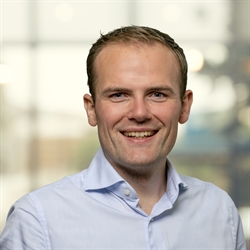
‘The aim was to clarify in which areas we are complementary and can strengthen each other. It is particularly interesting to work with a country like South Korea because, due to its location, it has long been thinking about issues such as security of supply and defence.’
Joris Vierhout, Economist at Economic and Innovation Policy within TNO Vector
Strengthening each other
Joris Vierhout: “The aim was to clarify in which areas we are complementary and can strengthen each other. It is particularly interesting to work with a country like South Korea because, due to its location, it has long been thinking about issues such as security of supply and defence.”
Amber Geurts: “There is also clear complementarity in the field of innovation. While the Netherlands can mainly build on a strong knowledge base, South Korea builds on a strong production capacity. It is therefore not surprising that they are the first country in the world where a Quantum Key Distribution (QKD) system has been certified according to strict national security standards. This means that you can take the next step towards the market for those products. All reasons to work together.”
Strategic cooperation requires strategic intelligence
“South Korea and the Netherlands have mutual interests that make it interesting to explore closer cooperation. We are attractive in many areas because of our scientific knowledge, while Korea knows everything when it comes to organising large-scale production. You can never be fully strategically autonomous, but through cooperation you can strive for it,” says Joris Vierhout.
Strategic intelligence plays a key role in this. Amber Geurts: “Our resources are scarce, and that is why it is important to deploy them as effectively and purposefully as possible and to work with partners with the same interests. Suitable countries for cooperation must therefore be selected based on strategic information and a solid evidence base. We are currently working on this at TNO Vector with our growing work on Control Points.”
Meet the authors


Want to know more? Contact us
-
Cor Jorna
Functie:Business DeveloperSpecialisatie niet bekend-
E-mail:E-mail Cor
-
LinkedIn:Cor on LinkedIn
-