Strong Dutch position in the international 6G value chain, helped by ‘orchestrating innovation’
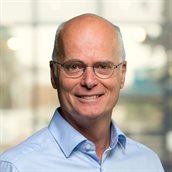
Collaboration between different parties is crucial to achieving successful and meaningful innovation, but it is often highly complex. A current example is the Future Network Services (FNS) 6G programme initiated by TNO, in which more than 70 companies, knowledge institutions and government bodies are working to secure a leading international position for the Netherlands in 6G. Paul Wijngaard, Alliance Director of the FNS programme at TNO, says that when work on the programme began five years ago, he benefited greatly from the ‘Orchestrating innovation in public-private ecosystems’ learning programme.
Ten learning programmes
Over the past five years, the Erasmus Centre for Entrepreneurship and TNO Vector have delivered ten of these learning programmes, training more than 100 professionals from over 60 public and private organisations to collaborate effectively within ecosystems. Participants have included universities and universities of applied sciences; national, provincial and municipal authorities; multinationals and innovative SMEs; business associations; and major infrastructure organisations. Satisfaction rates exceed 90%.
Paul Wijngaard shared his experiences of orchestrating innovation within the FNS consortium at the conclusion of the tenth learning programme in Rotterdam at the end of September.
‘It all came together at just the right time. After a long career with various companies in the telecoms and ICT sectors, I joined TNO. My brief was to establish a national innovation programme to strengthen our country’s position in digital infrastructure, while at the same time giving a boost to the Dutch economy and its future earning capacity. That means building an extraordinarily complex ecosystem. So the learning programme on this topic offered by ECE and TNO Vector was extremely timely and gave me a great deal.’
At the forefront
For decades, TNO represented KPN on international committees where manufacturers, network builders, operators and public authorities lay the foundations for the standardisation of the next generation of mobile networks. Following 1G, 2G, 3G, 4G and 5G, 6G is now the next step. It is vitally important for the Netherlands to be at the forefront of this development. Not only will this benefit the Dutch economy, it also aligns with Europe’s ambition to establish a strong position in the international landscape alongside the US and China.
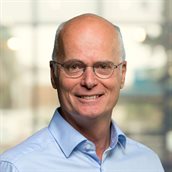
‘Within FNS, we have therefore established horizontal and vertical value chains that translate technological needs into application areas, and vice versa. In each of the ten chains, partnerships have been established between companies and knowledge institutions, with the roles and responsibilities of each party clearly defined.’
Paul Wijngaard, Alliance Director of the FNS programme at TNO
Value chains
Paul Wijngaard: ‘To achieve that ambition, you have to look at the ecosystem as a whole. That is why the consortium represents the entire value chain. You cannot afford to have any links missing. For example, you need the capabilities to produce intelligent chips and antennas, but you also need manufacturers that incorporate those components into their equipment. Network builders then integrate that equipment into their infrastructure, after which operators use it to provide services to their end users.’
‘Within FNS, we have therefore established horizontal and vertical value chains that translate technological needs into application areas, and vice versa. In each of the ten chains, partnerships have been established between companies and knowledge institutions, with the roles and responsibilities of each party clearly defined.’
Ideas, insights and inspiration
The Orchestrating innovation learning programme provided Paul Wijngaard with a wealth of insights into how ecosystems work: what they need to succeed, how to set priorities and formulate shared objectives, which actors need to be involved and how they interact, what funding is required, and how to deal with conflicting interests.
‘Far too much to list,’ says Paul Wijngaard. ‘You are given a lot of theory and then work in small groups to translate it into your own professional practice. You discuss with two or three other participants how the ideas might work in each person’s particular environment. You challenge one another and learn from each other. My own group included people from industry, healthcare and product development. It was very diverse and highly instructive. You come away with ideas, insights and inspiration.’
A broad-based partnership
Then comes the practical part: establishing a broad partnership to bring the Future Network Services programme to life. Laying the foundations took almost a year. It involved conducting dozens of interviews with representatives from businesses, public authorities and other organisations; working with a group of experts to write a position paper setting out the importance of the initiative and the path ahead, including a call to action; and then securing funding.
‘Fortunately, the many companies we approached were enthusiastic about the plan to develop the new generation of mobile communications from the Netherlands. With their explicit backing, along with support from the ICT top sector and the Ministry of Economic Affairs, we were ultimately able to get started in earnest.’
‘For the period from 2024 to 2030, more than €200 million has been made available through the National Growth Fund, while private-sector partners are contributing €110 million. In addition, a number of open calls worth €90 million will be launched within the programme next year.’

‘We combine TNO’s expertise in innovation with new concepts from ECE’s business and management research. It is not simply about entrepreneurship in itself, but about applying it within ecosystems made up of businesses, organisations and public authorities.’
Sabine Kerssens, Innovation Orchestrator at TNO Vector
Orchestrating innovation is becoming established practice
According to Seljan Abbas, programme manager at the Erasmus Centre for Entrepreneurship, interest in the learning programme has grown steadily since its first year. More than half of the companies and organisations that have sent participants once subsequently return with more colleagues. Almost all participants say they would recommend the programme to colleagues.
‘When we started this together with TNO, ‘orchestrating innovation’ was a term used mainly by insiders. Now you see it appearing more and more often. Participants leave with a clear picture of their own ecosystem. They know who they need, what motivates those parties and how to bring everything together.’
Sabine Kerssens of TNO Vector adds: ‘We combine TNO’s expertise in innovation with new concepts from ECE’s business and management research. It is not simply about entrepreneurship in itself, but about applying it within ecosystems made up of businesses, organisations and public authorities.’
Built on strengths
Paul Wijngaard: ‘I cannot pinpoint exactly what I applied from the learning programme when setting up the 6G programme, but those four days definitely helped me to build and orchestrate an ecosystem involving so many different parties. It is built on our strengths. We do not have a Google or Microsoft cloud here, nor do we have an Apple or Samsung. But we do have plenty of innovative companies that are at the forefront of many areas of digital network infrastructure.’