ProRail leads the way in Europe with green rails
The production of rails generates substantial CO₂ emissions. ProRail, the Dutch rail infrastructure manager, therefore aims to switch to green rails, made largely from recycled steel and produced using green electricity. However, such rails are still scarcely available on the market. ProRail asked TNO Vector to investigate the options and pathways for turning this ambition into reality.
A challenge and an opportunity
“We realised there is no silver bullet, but we also know that the steel sector must decarbonise. As a relatively small buyer in Europe, we depend on what the major steel producers can offer. We face a major challenge, but also a real opportunity. That is why TNO advised us to join forces with manufacturers and other supply-chain partners. And that approach delivered results surprisingly quickly,” says Joost Scheepens, who is responsible for market strategy at ProRail.
Two scenarios
According to Lotte de Groen, market director at TNO Vector, ProRail had already been in contact for some time with companies capable of producing steel in a more sustainable way. The key question was which strategy ProRail should pursue to ensure long-term access to green rails.
“We examined two scenarios. The first is a closed-loop approach, in which high-quality used rails are not sold to scrap traders, but instead reused to produce new rails. In the open-loop scenario, business continues as usual, with the risk that, over time, insufficient scrap will be available to produce green rails. For both scenarios, we analysed the implications across the value chain, looking not only at CO₂ emissions, but also at collaboration between supply-chain partners. In addition, colleagues from TNO provided technical expertise on the production and use of more sustainable steel.”
Engaging with supply-chain partners
Bart Schotsman, systems specialist at ProRail, explains: “We are in continuous dialogue with the three European manufacturers that could potentially produce green rails. For example, we visited Voestalpine in Austria, where a facility had been built to manufacture rails from recycled steel. They were interested to hear which direction we are taking in replacing rails with more sustainably produced alternatives.”
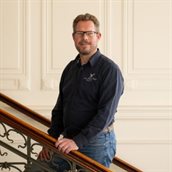
“By engaging with them and other supply-chain partners, new ideas emerge and you help each other move forward on the path to decarbonisation.”
Bart Schotsman, Systems Specialist at ProRail
Bringing stakeholders on board
Collaboration across the supply chain is essential to realise greening ambitions. Lotte adds: “ProRail may be a relatively small player in Europe, but it is innovative and clearly at the forefront. That appeals to major manufacturers. ProRail has a great deal to offer. At the same time, ProRail cannot do this alone, just as steel producers, recycling companies, scrap traders, logistics providers and other supply-chain partners cannot do it on their own either. That is why we also advised ProRail to actively involve all relevant stakeholders and to share and test its strategy for transitioning to green rails with them. As experience has shown, this leads to tangible results.”
A European first
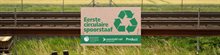
Among Europe’s major rail infrastructure companies, ProRail succeeded last year in finding a manufacturer committed to producing green rails. The first kilometres were installed on a section of track in North Holland — a European first. These green rails were produced by the French steel company Saarstahl and supplied by Voestalpine Track Solutions Netherlands, which also operates a recycling facility in the Netherlands. Saarstahl is currently the only manufacturer capable of producing these green rails.
Traditionally, rail steel is produced from iron ore and coal in a blast furnace, a process that causes high CO₂ emissions. For more sustainable production, TNO examined three alternative methods in which the blast furnace is replaced by an electric arc furnace (EAF) that processes recycled steel, or scrap. This results in significantly lower emissions and requires far fewer raw materials.
Moving forward together
“Becoming circular is not something you do alone — you need the entire supply chain for that,” says Joost. “What do we have to offer manufacturers, and what can they offer us? Everyone is finding their way in the transition to a more sustainable future. Because, as a relatively small player, we do not have the purchasing power of rail companies in Germany or France, we need to make ourselves interesting to manufacturers.”

“By bringing forward ideas, involving other supply-chain partners and running pilots. That was also TNO’s advice to us: move forward together and keep each other informed of new developments.”
Joost Scheepens, Responsible Market Strategy at ProRail
A changing supply chain
That is how things started to move after ProRail’s team visited the facility. New questions immediately emerged, and so did new solutions. How do we get our used rails to the plant? Who takes care of the transport? How are the old rails processed? Which legal and regulatory requirements must be met? And how do we organise the logistics?
Bart says: “The entire supply chain is changing. You notice that people appreciate the fact that we are making a meaningful contribution. For producers, this involves major investments. That is why it makes sense to run pilot projects together, so you can be sure that the product you are developing is of good quality and future-proof.”
Securing the supply of high-quality scrap
Scrap is essential for the production of green rails. To meet ProRail’s targets, the rails must consist of at least 79 per cent scrap. However, the future availability of this recycled steel is uncertain, particularly in light of current geopolitical developments. According to TNO’s analysis, by building a strategic position in the scrap market, including in collaboration with partners, ProRail can help improve the security of supply of high-quality scrap.
“As 2030 approaches, you can see the three major manufacturers investing heavily in the production of green rails, with scrap as the main input. Thanks to TNO’s advice, we now have a better understanding of how, by building a position in the scrap market and taking procurement measures, we may be able to achieve our objectives,” Bart concludes.
Photo: ProRail, Shane van Hattum
Want to know more? Contact us
-
Lotte de Groen
Functie:Acting market directorSpecialisatie niet bekendMy name is Lotte de Groen. I am Acting Market Director at TNO Vector, where I operate at the strategic intersection of societal transitions, innovation, and market development. In this role, I focus on accelerating and scaling transitions that have a tangible impact on long-term competitiveness, societal resilience, and broad prosperity.
-
E-mail:E-mail Lotte
-
LinkedIn:Lotte on LinkedIn
-