Orchestrating innovation helps Defence innovate faster for a smarter and more agile armed forces
There are strong similarities between military and commercial thinking. While terms such as profit, value proposition and business models do not fully apply to the armed forces, there is much alignment with the business world. Innovation is high on Defence’s agenda to ensure that we can continue to protect our country and maintain our advantage on the battlefield. Collaboration with companies, from start-ups to multinationals, is therefore a priority.

A unique combination
So says Hugo Leyte, head of the Orchestrating Defence Innovation (ODIN) office at the Ministry of Defence, at the conclusion of the four‑day Orchestrating Innovation learning programme, organised by the Erasmus Centre for Entrepreneurship (ECE) and TNO Vector. This programme offers a unique combination of TNO’s knowledge and experience in orchestrating innovation, and ECE’s expertise in new business models and innovative leadership. Under the guidance of experts, participants develop capabilities for innovation in public‑private collaboration.
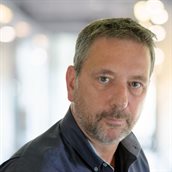
‘Defence is a huge organisation with many disciplines, which makes it genuinely complex, especially when it comes to innovation. We must innovate faster, gain better access to the newest and best solutions, and apply them more quickly within the armed forces.’
Hugo Leyte, head of the Orchestrating Defence Innovation (ODIN) office at the Ministry of Defence
Innovating faster
‘And that is exactly the crux for Defence,’ Hugo says. ‘We saw that the business sector now innovates much faster than we were able to. That is why we have set up a public‑private partnership organisation (PPP) that must give shape to cooperation with industry. Defence is a huge organisation with many disciplines, which makes it genuinely complex, especially when it comes to innovation. We must innovate faster, gain better access to the newest and best solutions, and apply them more quickly within the armed forces.’
Finding each other more easily
Defence’s ODIN office is now building an innovation network of seven regional teams in which Defence, the Ministry of Economic Affairs, provinces, regional development agencies, knowledge institutions and companies – from major industries to innovative SMEs and start-ups – join forces. Because cooperation is essential.
‘It works both ways. Because Defence wants to innovate more quickly, we must be easier for businesses to find – and we must be able to find them. Companies often say that they struggle to reach us. A start‑up may have a brilliant invention for one of our armed forces units, but cannot easily reach the right place or person within our organisation. Yet we cannot afford to miss that one unique innovation.’
Eyeopeners
The Orchestrating Innovation learning programme by ECE and TNO Vector is, according to Hugo, valuable in driving a shift in thinking within Defence. ‘After a colleague and I completed the four‑day course, we concluded that we had gained many new insights. You hear different terminology and learn to approach things differently. Especially for military personnel, the course offers numerous eye‑openers.’
Putting knowledge into practice
Jip Dresia, Education Lead at ECE: ‘As the expertise centre of Erasmus University, we focus on bringing our knowledge on entrepreneurship and building an innovation culture into practice. But also on scaling innovations and organising them internally. We often hear from participants that they appreciate receiving confirmation that they were on the right track, but gain more tools in the programme to make their work more concrete.’

‘Military staff excel in organisation, logistics and teamwork. Here they are introduced to a commercial perspective. For participants with Defence or other operational backgrounds, this is the best of both worlds.’
Sabine Kerssens, senior innovation orchestrator at TNO Vector
Best of both worlds
According to Sabine Kerssens, senior innovation orchestrator at TNO Vector, the learning programme is primarily about bringing worlds together. ‘Military staff excel in organisation, logistics and teamwork. Here they are introduced to a commercial perspective. For participants with Defence or other operational backgrounds, this is the best of both worlds.’
New insights and skills
Hugo agrees. The business world and the armed forces differ less than many might think. ‘What a company calls a competitor, we call the enemy. The market in which a business operates is what we call the battlefield. You can draw many parallels and learn from them. With the new insights and skills that you gain as a military professional during the course, you are better equipped to enter into dialogue with the commercial world. And that is exactly what we need—especially now that the new government is strongly committed to cooperation with industry and knowledge institutions.’
Strengthening competitive position
The benefits go both ways. Defence innovates faster thanks to closer collaboration with business, while companies gain better access to military markets, potentially new civil markets, and contribute to a safe and resilient Netherlands. Through cooperation in regional ecosystems, the seven regional teams also strengthen regional earning capacity and competitive position.
Jip: ‘That is why taking a course like this is exceptionally valuable. How do you raise sustainable cooperation to the next level? How do you bridge conflicting interests between, for example, public and private parties? How do you jointly determine which innovations are needed, and when?’
Unusual suspects
Hugo expects a significantly changed way of collaborating between Defence and business. The traditional defence industry will continue to prove its worth, but equally exciting is finding what he calls the ‘unusual suspects’: start‑ups, scale‑ups and innovative SMEs that, together with knowledge partners such as TNO, contribute to regional ecosystems to develop innovations more quickly and apply them directly within the armed forces.
The Orchestrating Innovation learning programme starts on 9 April
Questions? Get in touch with me
-

Sabine Kerssens
Functie:Innovation OrchestratorSpecialisatie niet bekendHi, my name is Sabine Kerssens, I work at TNO Vector since 2023.
On the cutting edge of business and engineering, I specialise in bringing innovations to market and knowing what makes the startup ecosystem tick.
Reach out to me regarding startups, deeptech and complex systems!
-
E-mail:E-mail Sabine
-
LinkedIn:Sabine on LinkedIn
-